The Setup: Trump's Own Definition
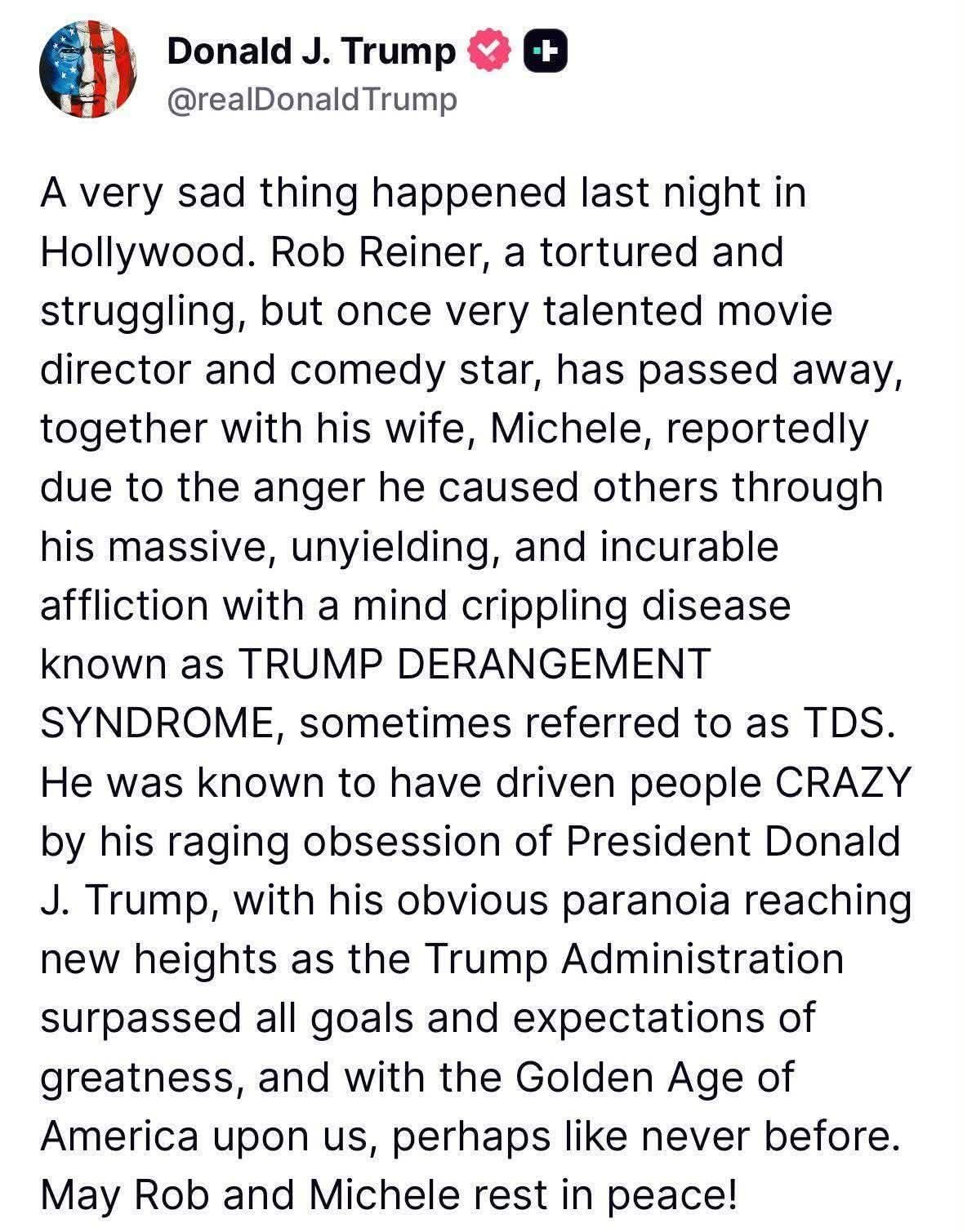
On December 15, 2025, Donald Trump posted about Rob Reiner's death. Reiner, the acclaimed director of All in the Family and When Harry Met Sally, was found dead alongside his wife Michele in their Brentwood home. Trump's response? To blame Reiner for his own murder.
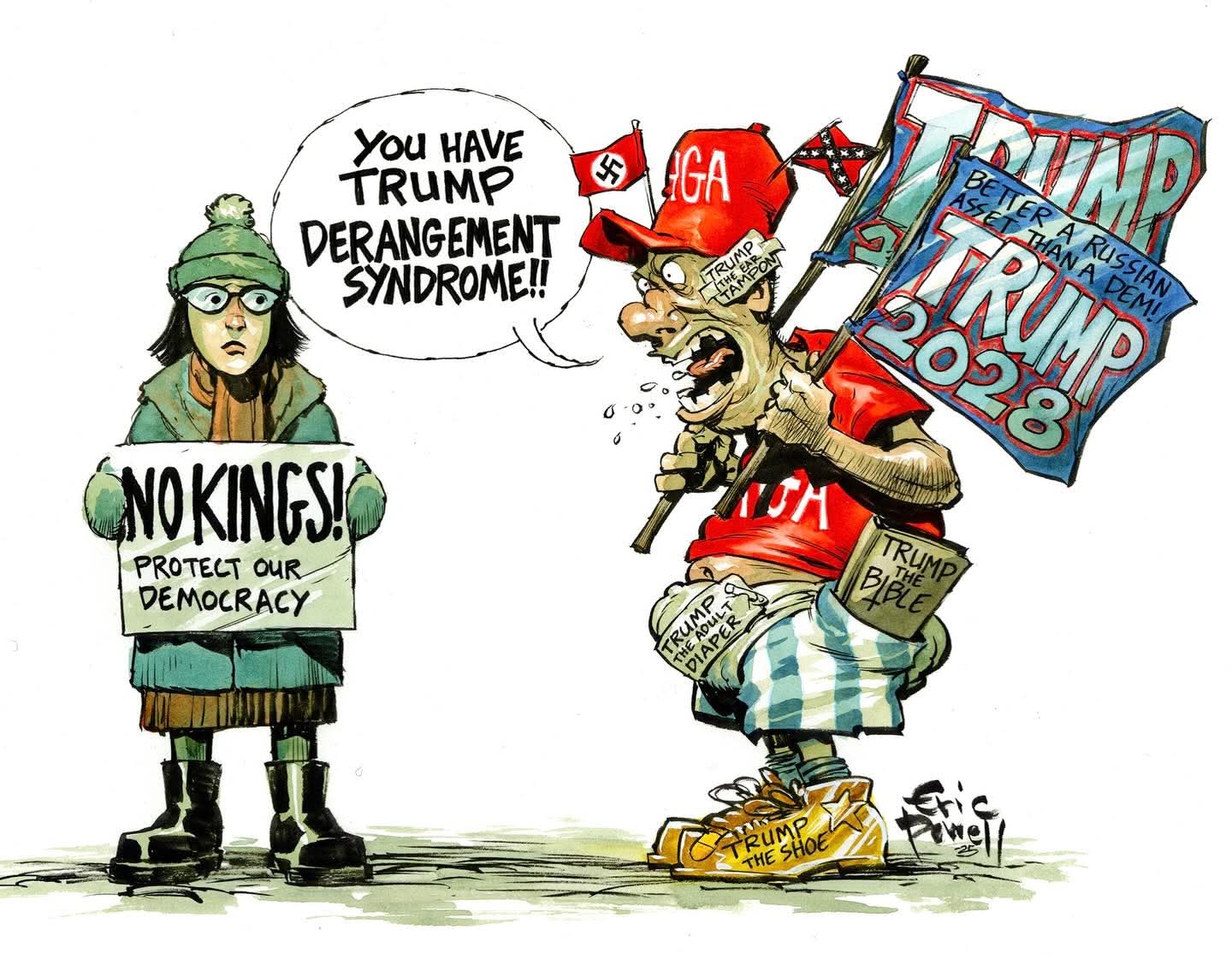
Trump claimed Reiner had "Trump Derangement Syndrome" - an "incurable affliction" that drove him to such obsession with Trump that it "caused others" (implicitly, his killers) to act violently. Trump's post was surgical in its irony: he was accusing Reiner of being so dangerously obsessed with Trump that it destroyed his life, all while Trump himself was so obsessed with the story that he had to insert himself into a tragedy that had nothing to do with him.
But here's the problem: Trump posted this after authorities had already publicly identified and arrested Nick Reiner, Rob's 32-year-old son, as the suspect. Trump knew exactly who killed Rob and Michele. And it had nothing to do with Trump Derangement Syndrome.
The Facts: What Actually Happened
On Saturday, December 13, Rob and Michele took Nick to a Christmas party at Conan O'Brien's home. Nick had recently relapsed into heavy drug use - heroin and opiates. His parents brought him specifically because they were worried.
At the party, Nick was "freaking everyone out," displaying erratic, antisocial behavior. He got into a loud argument with Rob. It wasn't about politics. It was about a 32-year-old man with 17+ rehab stints since age 15 who was refusing to get clean, and parents at their wits' end.
The next afternoon, both were dead. Nick was arrested by Sunday evening. By Monday morning, when Trump posted, the public knew: this was a drug-fueled family tragedy tied to addiction and mental illness. Full stop.
Yet Trump still blamed the victim - Rob Reiner - for causing his own death through excessive Trump criticism.
Rung 1: The Broken Logic
Trump's Definition: An obsession with Trump so consuming that you bring him up in situations where he's irrelevant, you invent narratives to make him the center of events he had nothing to do with, and you prioritize Trump-related grievances over basic facts and human decency.
What Trump Just Did: A man died in a drug-related family killing. Trump inserted himself into the narrative. Trump invented a political explanation for an apolitical event. Trump blamed the victim based on his criticism of Trump. Trump made Rob Reiner's death about Trump.
That's the textbook definition of Trump Derangement Syndrome by Trump's own standard.
Rung 2: The Double Standard
In September, conservative activist Charlie Kirk was murdered. Trump's immediate response? Blame "the radical left" for creating a climate of violence. Trump called for investigations into organizations that "fund and support" political violence. The narrative was: The left is violent. They are terrorists.
Fast forward three months. Rob Reiner - a liberal victim of his own son's drug-fueled violence - dies. Trump's response? Completely different. This time, Trump blames Reiner. Implies he deserved it. Says Reiner's Trump criticism was so deranged it got him killed.
The Hypocrisy: One standard for conservative victims. A completely different standard for liberal victims. Trump isn't interested in truth. He's interested in narratives that serve him.
Rung 3: The Cult Question
There's an old saying in politics, attributed to Ed Koch and recently invoked by NYC politician Zohran Mamdani: "If you agree with me on nine out of twelve issues, vote for me. If you agree with me on all twelve, see a psychiatrist."
The point is simple: perfect agreement is impossible. If someone agrees with you on literally everything, one of two things is true - either you're not thinking hard enough, or they're not. It's cult behavior.
Apply this to Trump's followers: They rarely, if ever, criticize him. They don't point out contradictions. When Trump changes positions, they change positions. When presented with evidence of hypocrisy - like Kirk vs. Reiner - they either don't notice or rationalize it away.
Apply it to Rob Reiner: He was a vocal Trump critic. But Reiner had a full life. He made films. He engaged with family. He had political positions independent of Trump. He disagreed with Trump on policy and character - which is normal political opposition, not obsession.
Rung 4: The Pattern
Trump has a documented pattern. Every holiday - Thanksgiving, Easter, Christmas, Father's Day - he turns it into an attack vector. He can't let a holiday be about what it's supposed to be about. It has to become about his grievances.
Thanksgiving 2024: "Happy Thanksgiving to all, including to the Radical Left Lunatics who have worked so hard to destroy our Country, but who have miserably failed..."
Easter 2025: After wishing happy Easter, he spent the next several hours posting about murderers, drug dealers, MS-13, weak judges, and Radical Left Lunatics. Then he signed off with "with great love, sincerity, and affection."
Father's Day, Christmas, Mother's Day - every single moment gets weaponized. And that's the actual derangement. Someone who can't let reality exist without making it about Trump.
Rung 5: The Inversion
The term "Trump Derangement Syndrome" was always a rhetorical inversion. It took legitimate criticism of Trump - his unpredictability, his divisiveness, his narcissism - and pathologized it as a mental illness in Trump's opponents. It was a way to delegitimize criticism without addressing the actual criticism.
But what we're seeing now is that the term describes Trump's own behavior perfectly. He is the one:
- Obsessed with his critics to the point of distorting events to make them about him
- Unable to let any moment exist without inserting himself
- Willing to blame victims if it advances a Trump-centric narrative
- Treating political opposition as a disease rather than normal disagreement
- Making every holiday, every moment, every story about Trump
The rest of us are just disagreeing with him. That's politics. That's not a syndrome. That's thinking.
The Logical Conclusion
Rob Reiner didn't die of Trump criticism. He didn't have TDS. He died because his son had an addiction problem and a family conflict spiraled into violence. That's tragic. That's sad. That's a story about mental health, addiction, and parental desperation.
Trump's refusal to acknowledge this simple fact - his insistence on inserting himself into a tragedy he had nothing to do with - is itself the most powerful evidence that he doesn't understand the difference between criticism and obsession. He thinks if you criticize him, you must be obsessed with him. Because he is obsessed with himself.
Until we recognize that - until we call it what it is - Trump will keep doing exactly what he did with Rob Reiner: taking tragedy and weaponizing it to feed his own narcissism.